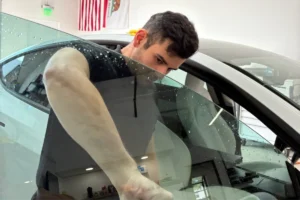

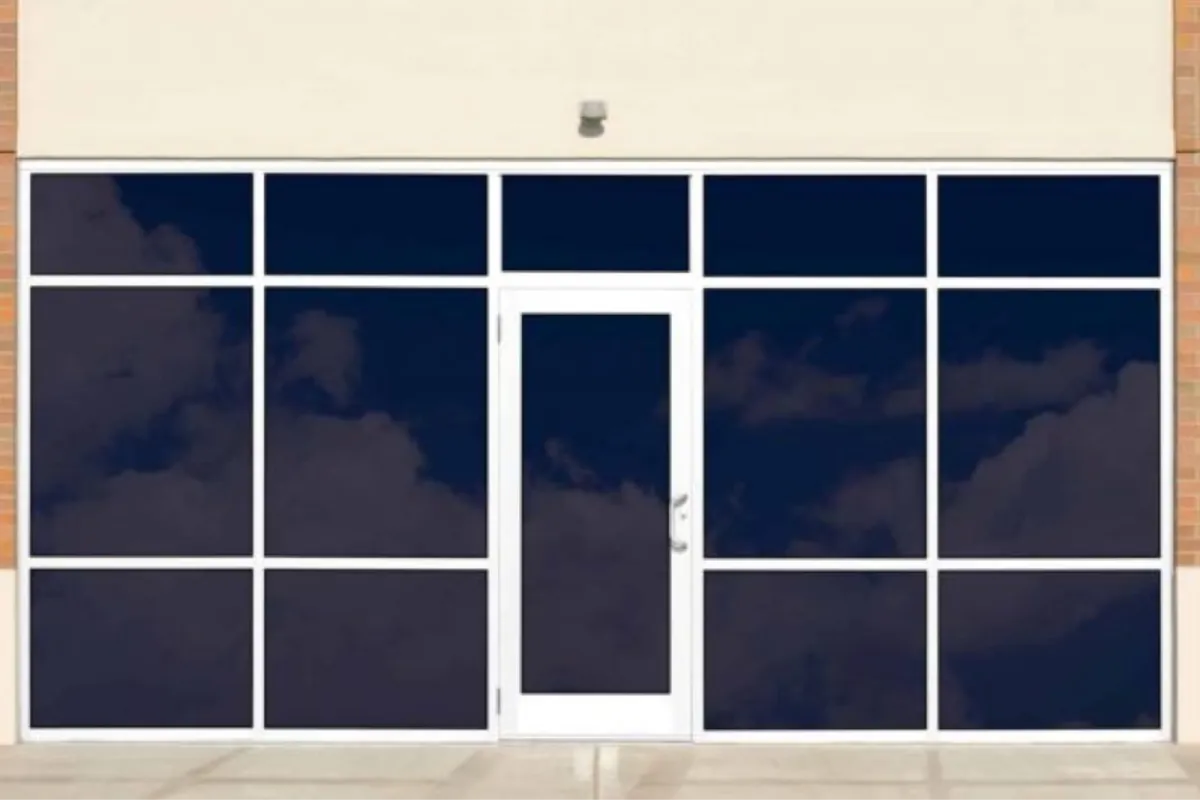
To safely clean and maintain large glazed surfaces after commercial window tinting, wait at least thirty days for the adhesive to fully cure, then use a clean microfiber cloth paired with a mild, ammonia-free soap solution. Avoid all abrasive scrubbing pads, harsh chemicals, and squeegees with damaged rubber blades. This disciplined maintenance strategy prevents permanent scratches, lifting at the seams, and optical distortion, ensuring long-term solar protection.
Technical Specifications of Commercial Architectural Window Films
Commercial window films are high-performance polyester laminates engineered to manage solar radiation. Understanding their physical properties dictates how they must be treated during maintenance.
- Sputtered Metalized Layer: A microscopic layer of metallic particles (such as titanium or nickel) evenly embedded into the film to reflect solar heat and block ultraviolet radiation without distorting structural visibility.
- Scratch-Resistant Hardcoat (SR): An optically clear, acrylic-based outer layer designed to protect the softer polyester film from light friction during routine maintenance and cleaning cycles.
- Pressure-Sensitive Adhesive (PSA): An advanced, optically clear bonding agent that requires moisture to activate. It undergoes a mandatory evaporation and curing phase lasting 30 to 45 days post-installation.
- Total Solar Energy Rejection (TSER): The metric used to measure the combined percentage of ultraviolet, visible light, and infrared radiation that a film successfully deflects away from a building’s glass.
The Four Phases of a Safe Commercial Window Cleaning Routine
Maintaining extensive architectural glass installations without tearing or peeling the underlying solar film requires a non-abrasive, highly structured cleaning sequence.
- Dry Microfiber Pre-Wipe: Initial Dusting Phase.
Gently wipe the glass surface with an ultra-soft, dry microfiber towel to lift away loose surface dust, pollen, and abrasive airborne grit. This step prevents micro-scratches during wet cleaning.
- Ammonia-Free Solution Mist: Application Phase.
Mist the glazed surface evenly with an ammonia-free cleaner or a mixture of distilled water and mild baby shampoo. Avoid saturating the pane edges where the film meets the window frames.
- Soft Microfiber Wiping Pass: Cleansing Phase.
Using a clean, damp microfiber cloth, wipe the glass using overlapping, horizontal motions. Apply minimal horizontal pressure, focusing gently on areas with heavy fingerprints or smudges.
- Squeegee and Border Finish: Drying Phase.
Draw a clean, professional squeegee with a fresh rubber blade down the glass panel in single, continuous strokes. Immediately dry the outer perimeter and frames with a separate dry towel to prevent edge-lifting.
Comparison Matrix: Cleaning Solutions and Tool Safety Profiles
Choosing the correct materials is vital to ensuring that a commercial tint configuration achieves its maximum intended operational lifespan.
| Cleaning Tool / Chemical Compound | Safety Status on Commercial Tint | Long-Term Impact on Window Film Structure |
| Ammonia-Based Window Cleaners | Highly Destructive | Chemically breaks down the top scratch-resistant hardcoat, causing brittleness, purple discoloration, and bubbling. |
| Mild Dish Soap / Baby Shampoo | Safe & Recommended | Gently dissolves surface oils and grease without affecting the polyester matrix or underlying adhesive. |
| Abrasive Scrub Sponges & Steel Wool | Highly Destructive | Cuts deep scratches directly into the protective clear coat, permanently clouding the architectural film. |
| Premium High-GSM Microfiber Cloths | Safe & Recommended | Traps and lifts abrasive mineral particulate away from the film surface inside safe, deep microscopic loops. |
Debunking the Myth: “Once Cured, Window Tint Makes Commercial Glass Completely Shatterproof”
A frequent misconception among facilities managers and commercial property owners is that installing an architectural window film makes standard commercial glass entirely shatterproof and immune to physical impacts. Many believe that because the film holds broken shards together during a thermal crack or localized blunt force event, the glass has been structurally reinforced to withstand heavy vandalism or storms.
In reality, standard solar and decorative window films do not alter the physical density or structural breaking point of the glass substrate itself. The glass will still crack or shatter under the exact same amount of mechanical stress as an untreated window. While specialized, heavy-duty safety and security films are specifically engineered with heavy tensile cross-linking to retain shattered glass inside the frame during blast or break-in events, standard solar films are primarily thermal and UV barriers. Their main benefit during a breakage is simply containment, preventing loose, razor-sharp shards from spraying inward and injuring building occupants.
Applying Our Elite Preservation Protocols to Solve This
Preserving the exceptional heat rejection, structural clarity, and immaculate look of large commercial glazed surfaces requires absolute technical discipline and elite asset management. At Kingdom Tint, we approach property protection as a long-term partnership rooted in excellence, integrity, and humility. We ensure that our business actions reflect our foundational values in everything we do, honoring your investment through unmatched craftsmanship.
We safeguard your property investments by deploying our advanced surface conservation framework, built entirely around how our specialists bring an uncompromised standard of excellence directly to your commercial building panels. Our specialized installation and maintenance system utilizes premium, industry-certified products, such as Geoshield window films and advanced protective barriers, and stands firmly behind our work with a clear lifetime warranty.
When your business teams work with us, you gain direct access to the owners from start to finish. This ensures precision, careful attention to detail, and a complete avoidance of rushed, cookie-cutter operations. Every architectural asset is protected using certified premium lines that provide a permanent shield against heat and ultraviolet damage. By rejecting high-volume shortcuts, we deliver a luxurious, community-focused service experience that yields total peace of mind and long-lasting commercial value.
Regional Environmental Variables and Architectural Maintenance
Commercial buildings positioned across coastal communities face severe atmospheric challenges that can drastically compromise large glass surfaces. Property managers supervising glass installations in regions spanning Coronado, Rancho Santa Fe, and La Jolla frequently battle heavy marine layers, blowing sand, and highly corrosive sea salt spray. When these mineral deposits accumulate on massive storefronts or office windows, they can cause irreversible hard-water scaling if left unmaintained.
To prevent salt and mineral buildup from permanently embedding into your architectural glazing, executing a specialized cleaning strategy is imperative. Seeking specialized assistance with commercial window tinting in Del Mar, CA, provides an immediately effective solution to these regional environmental factors. A premium solar film acts as a sacrificial barrier, protecting the expensive underlying glass from scratching under the friction of blowing coastal grit.
Implementing a consistent schedule ensures that your commercial office space or retail storefront preserves its optical clarity while keeping cooling costs remarkably low. Our team ensures that your architectural investments are treated with complete mechanical and chemical respect during and after installation. Relying on an advanced setup for Del Mar, CA, commercial window tinting means that instead of allowing intense sun and salt to degrade your building interiors, your workspace enjoys an immaculate reflection that handles intense seasonal elements with ease.
Ultimately, choosing a high-performance system for Del Mar commercial window tinting safely upgrades your building’s energy efficiency. By keeping the protective hardcoat clear of harsh chemicals and abrasive towels, local property owners can rest assured that their architectural investment remains beautiful, functional, and highly efficient for decades.
Secure Your Architectural Investment with Master Craftsmanship
Allowing improper cleaning chemicals, rough maintenance tools, or uncertified cleaning crews to handle your large architectural glass installations can quickly ruin high-performance window films, causing unsightly scratches, bubbles, and costly replacement bills. At Kingdom Tint, we help protect your facility’s energy efficiency and visual appeal through expert workmanship, proper maintenance practices, and uncompromising quality standards.
Bring pristine clarity and long-lasting performance back to your commercial glass assets. Contact us today and let our dedicated team handle your glass protection needs, providing premium care, exceptional service, and total peace of mind.
People Also Ask
Why does a new commercial window tint look hazy or bubbly right after installation?
This visual effect is known as the curing process and is completely normal. The water used during installation gets trapped between the film and the glass. As the pressure-sensitive adhesive sets over the first 30 to 45 days, this moisture forms tiny water pockets or a faint haze as it evaporates through the porous film material. Do not touch or squeegee these spots; they will disappear naturally.
Can commercial window film be cleaned with a standard pressure washer?
No, pressure washers should never be used on windows equipped with architectural film, especially when spraying from the inside or along exterior edge seals. The intense, concentrated water pressure can easily tear through the soft polyester material, destroy the edge seals, and inject water directly beneath the film, causing instant adhesive failure.
What should I do if a commercial tint panel gets scratched or begins peeling?
If an architectural film panel experiences a deep scratch or edge peeling, it cannot be patched or locally repaired effectively. The affected panel must be professionally stripped using specialized steamers and adhesive-dissolving agents to avoid scratching the underlying glass. Once cleaned, a fresh sheet of film must be cut and reinstalled across the entire glass surface.
How often should large tinted glazed surfaces be cleaned in an office environment?
For high-traffic commercial buildings, tinted glass surfaces should generally be cleaned every two to four weeks on high-touch interior zones (like entryways and conference rooms) and quarterly for exterior windows. This frequency stops the accumulation of abrasive dust and oils before they can bond with the film’s protective hardcoat.